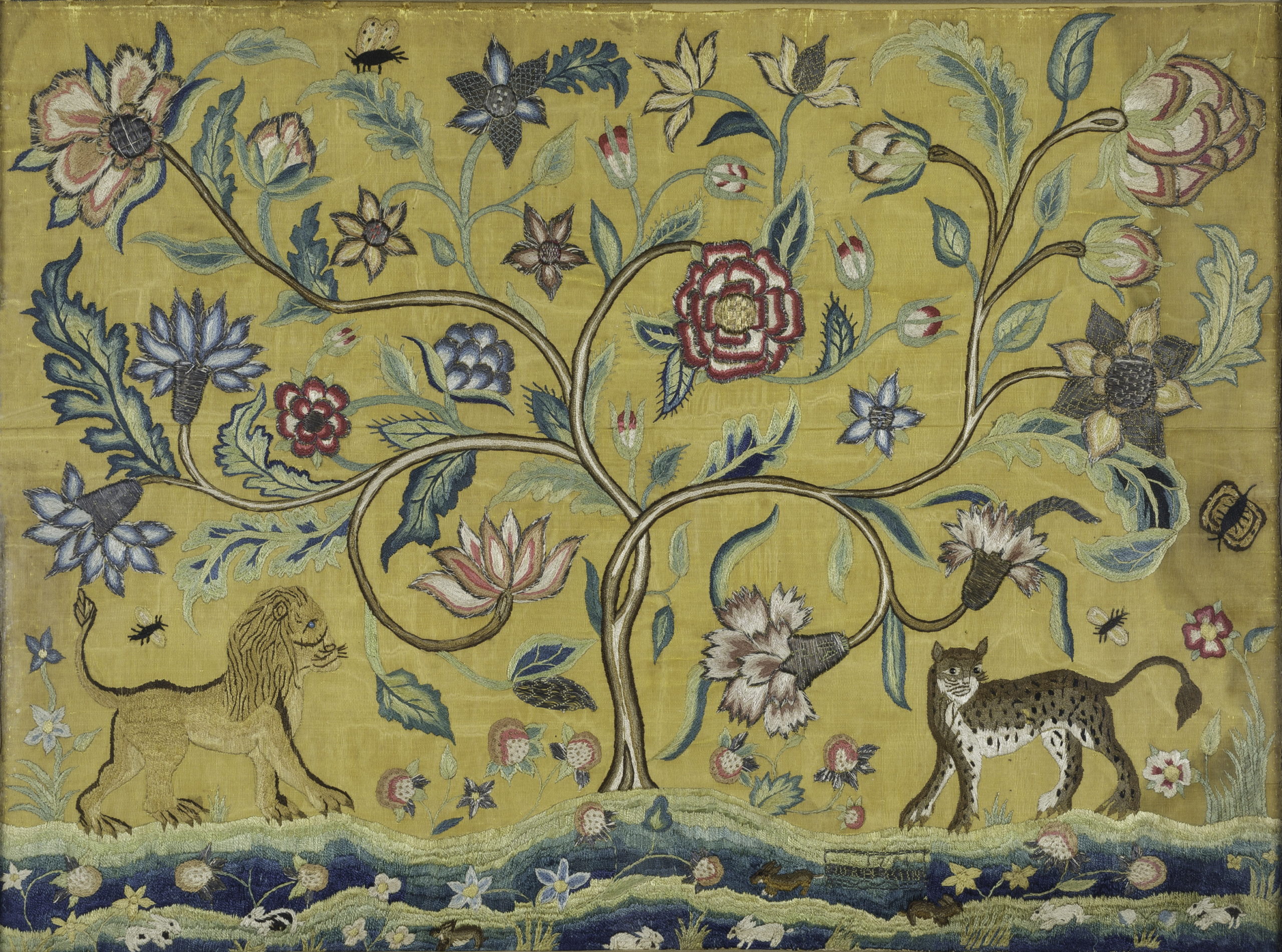
 Image: American Folk Art Museum, New York
The American Folk Art Museum in New York will open ‘Locating Girlhood: Place and Identity in Early American “Schoolgirl” Art’ on October 9, 2026, bringing together approximately 100 examples of needlework and other ornamental arts made by American girls in the eighteenth and nineteenth centuries. The exhibition will remain on view through February 28, 2027.
Presented as a major loan exhibition, ‘Locating Girlhood’ draws objects from more than 35 museums and private collections across the United States. The selection combines celebrated works with lesser-known pieces that are rarely shown publicly, according to the museum. It is billed as one of the most significant recent presentations devoted to the genre, which has often been grouped under the broad category of “schoolgirl art.”
The exhibition approaches these works through the lens of place, examining the connections among landscape, education and identity. Its focus extends beyond samplers and embroidery to include needlework pictures, watercolors, maps and other cartographic compositions. The museum describes landscape as a recurring visual subject in works made by American girls and young women from the eighteenth century onward, including depictions of country scenes, city views and geographic worlds.
By placing these objects within an art-historical account of American landscape, the exhibition challenges a narrative traditionally centered on male academic painters. The museum argues that girls and young women were engaging with landscape imagery long before the emergence of the Hudson River School. ‘Locating Girlhood’ therefore positions their work within a broader history of American art while also considering the colonial and early federal ideologies that shaped the worldview expressed in the objects.
The exhibition is timed to coincide with the United States’ semiquincentennial. Among the works identified on the museum’s exhibition page are Faith Trumbull’s 1754 ‘Needlework Picture’, attributed to Boston and Lebanon, Connecticut; Mary King’s 1754 ‘Needlework Picture (Tree of Life)’, made in Philadelphia; Lucina Hudson’s 1808 ‘Needlework Picture (Liberty)’; Lydia Russell’s 1809 ‘Family Record’; and Juliana Carpenter’s 1825 ‘Map of Two Hemispheres’. The presentation also includes a circa 1840 portrait titled ‘Young African American Girl’ and an 1845 sampler by Rachel Barrett associated with an African school in Halifax, Nova Scotia.
‘Locating Girlhood’ is curated by Emelie Gevalt, the American Folk Art Museum’s Deborah Davenport and Stewart Stender Deputy Director and Chief Curatorial and Program Officer, and Caroline Culp, Warren Family Assistant Curator. A publication accompanying the exhibition includes essays by Gevalt and Culp, a foreword by historian Laurel Thatcher Ulrich, contributions from art historian Elizabeth Bacon Eager and literary scholar William Huntting Howell, and an afterword by art historian Andrea Pappas. The American Folk Art Museum is located at 2 Lincoln Square in New York City and offers free admission.