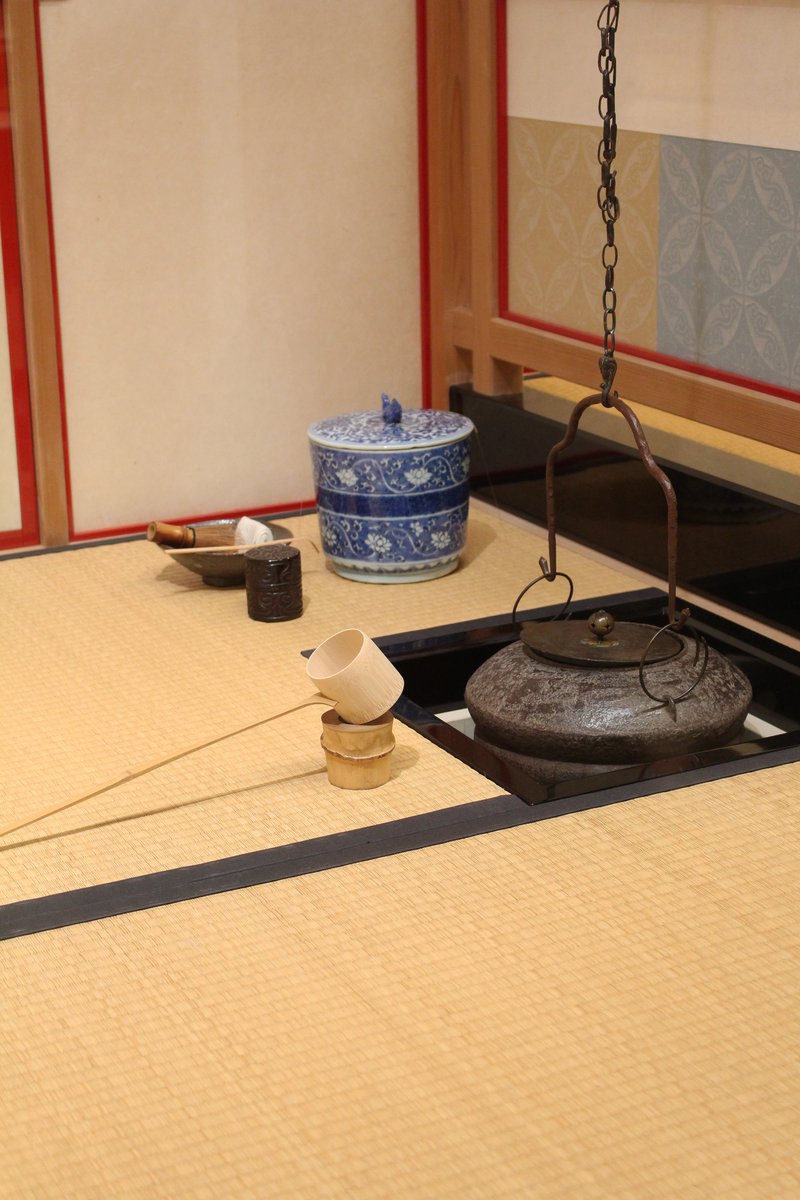
 Image: Tokugawa Art Museum, Nagoya
The Tokugawa Art Museum in Nagoya is highlighting the reconstructed ‘Kusari’ Room from Nagoya Castle’s Ninomaru Palace, a section of the castle complex associated with tea service for the shogun and their envoys. The museum’s notice presents the room as part of the palace reconstruction, bringing attention to an architectural and ceremonial space tied to the Tokugawa era.
According to the museum, the room is identified as ‘Kusari’ — the chain room — and belongs to Nagoya Castle’s Ninomaru Palace. The source material says this part of the palace has been reconstructed, and that it represents the place where the shogun and their envoys were served tea. The room’s designation is linked either to the chain that connected the large hall and smaller chambers or to chains used to hang kettles from the ceiling.
The Tokugawa Art Museum, based in Nagoya, often presents material connected to the Tokugawa family and the cultural world associated with the shogunate. In this case, the museum’s focus is not on a temporary contemporary exhibition with a stated run, but on a specific historical interior and the meanings attached to it. The museum’s framing places the reconstructed room at the center of the presentation, underscoring its role within the broader palace architecture.
The ‘Kusari’ Room also offers a glimpse into the formal hospitality culture of castle life. The source indicates that the room was used in connection with tea service for high-ranking visitors, suggesting a setting that combined ceremonial function with architectural distinction. Its reconstructed state allows the museum to point to a space that once formed part of the lived environment of Nagoya Castle’s Ninomaru Palace.
The naming of the room, as described by the museum, reflects two possible explanations. One traces ‘Kusari’ to the chain linking the large hall and the smaller chambers; the other to the chains used for hanging kettles from the ceiling. The museum does not choose between these explanations in the source material, but instead presents both as the basis for the room’s name.
No exhibition dates were provided in the source material, and the museum’s announcement does not describe a separate event schedule. The focus remains on the reconstructed ‘Kusari’ Room itself, and on its place within Nagoya Castle’s Ninomaru Palace as preserved and interpreted by the Tokugawa Art Museum.