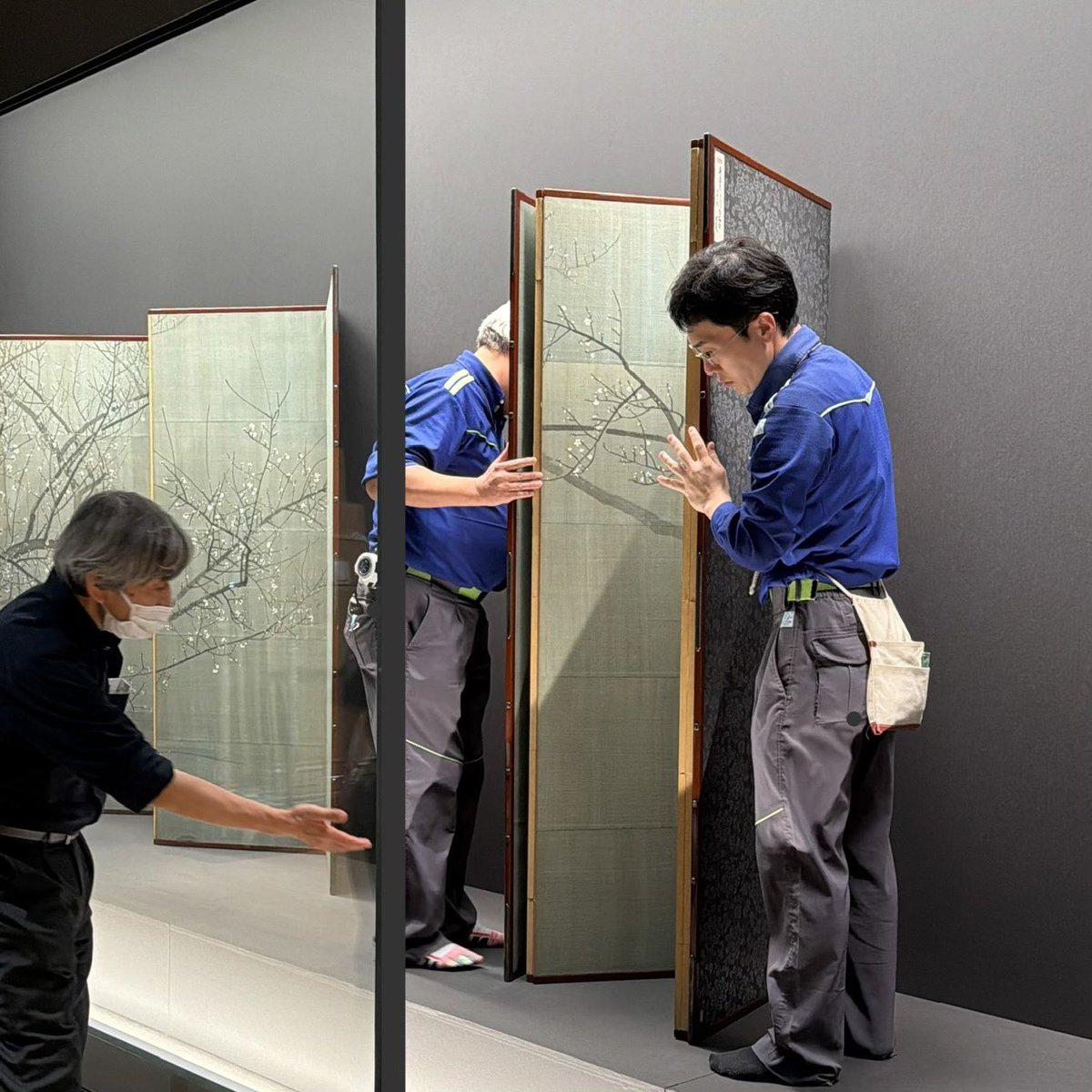
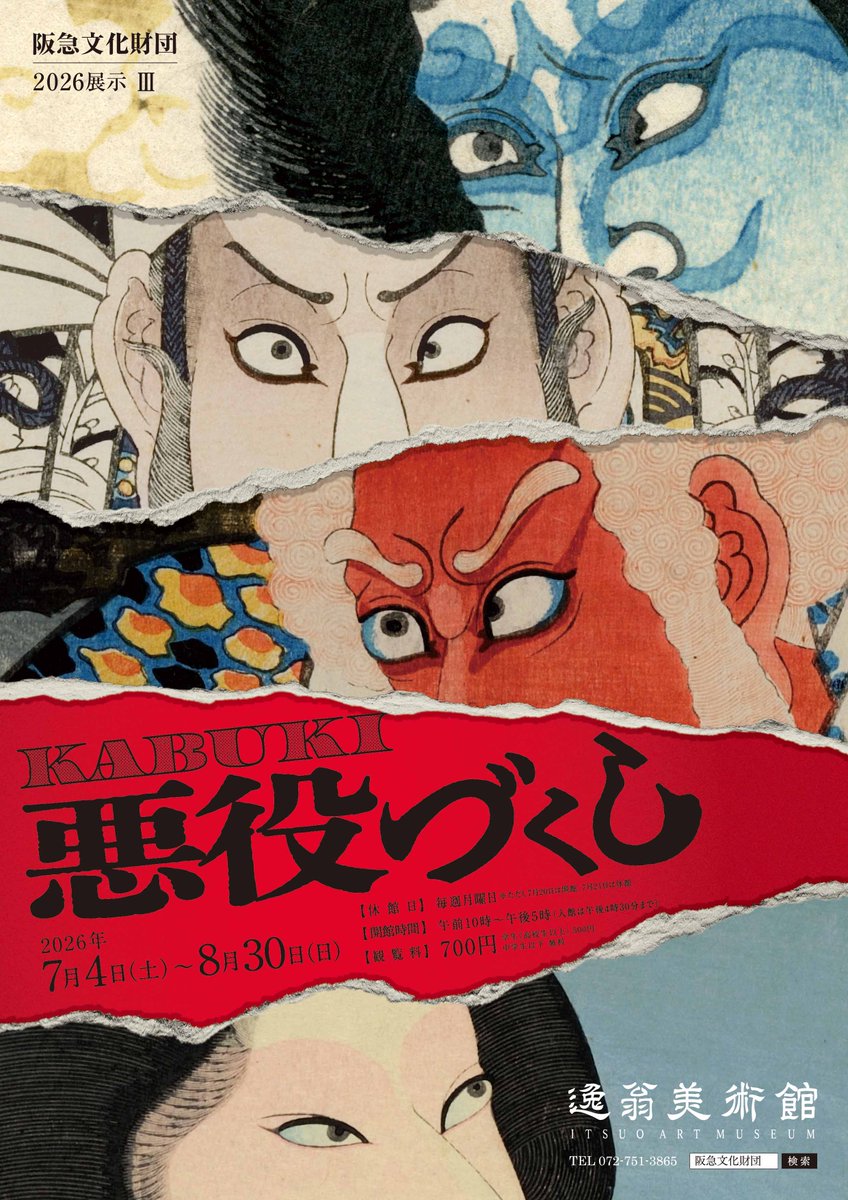
 Image: Itsuō Art Museum, Ikeda
The Itsuō Art Museum in Ikeda, Japan, is presenting 'KABUKI悪役づくし', an exhibition devoted to the villains of Kabuki theatre. According to the museum’s exhibition notice, the display examines the appeal of antagonists across the form, from supporting figures to principal villains, and focuses on the qualities that make these characters so visually and dramatically compelling.
Rather than framing Kabuki’s villains simply as obstacles to the hero, the exhibition highlights their enduring attraction to audiences. The museum describes them through traits such as cruelty, coldness and ruthlessness, placing emphasis on the tension between their wicked roles and the fascination they generate on stage. That approach positions villainy itself as a subject of close looking, rather than a secondary feature of the repertoire.
The show is part of the programming of the Itsuō Art Museum, an institution in Ikeda with a focus on Japanese art and culture. In this case, the museum turns to Kabuki as a theatrical tradition in which costume, gesture and character type all help shape the viewer’s experience. By centring antagonists, the exhibition draws attention to the performance conventions that allow even unsympathetic characters to become memorable presences.
The title, 'KABUKI悪役づくし', signals the exhibition’s concentration on villain figures across Kabuki. The museum’s description indicates that the project spans both side roles and main villains, suggesting a broad survey rather than a single character study. The emphasis on antagonists also points to the way Kabuki has long given distinctive visual and dramatic form to moral conflict, making negative characters a crucial part of the art’s storytelling language.
The exhibition opened on 15 July 2023 and is listed as running until further notice at the Itsuō Art Museum in Ikeda, Japan. No closing date is given in the available material. As presented by the museum, the show offers visitors an opportunity to consider how Kabuki assigns theatrical power to figures defined by their villainy, and how that power has helped make such roles persistently compelling on stage.