 Image: National Gallery, London
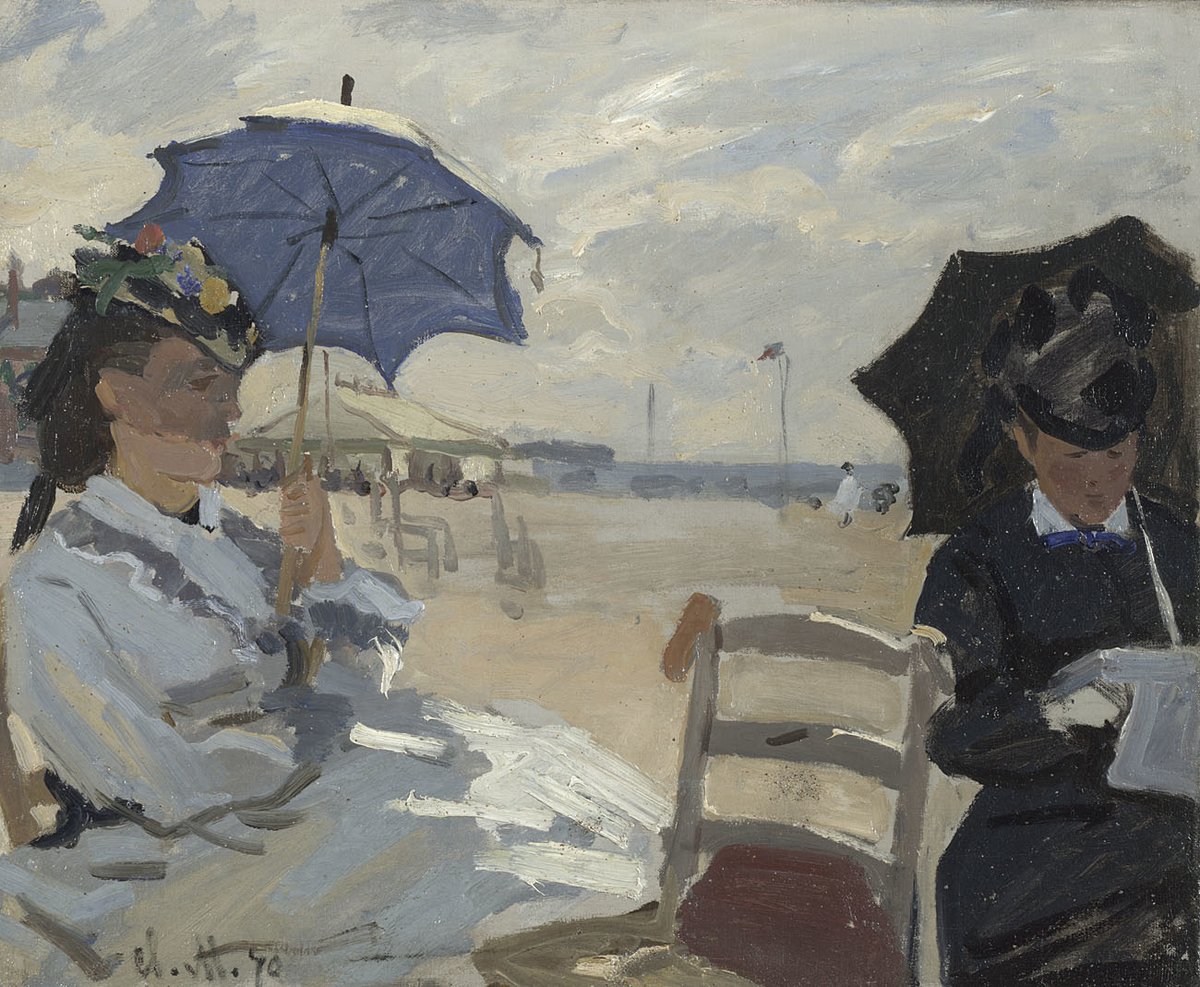
The National Gallery in London has drawn attention to Claude Monet’s ‘The Beach at Trouville’ in a short summer-themed post that places the painting within the artist’s early career and personal life. The gallery describes the work as one of several paintings Monet made in the summer of 1870, while he was on honeymoon on the Normandy coast.
The post focuses on the beach scene’s figures as well as its seasonal atmosphere. According to the National Gallery, the woman in white is Monet’s new wife, Camille. A second woman, dressed in black, is believed to be a figure in the painting, or possibly someone related to Monet. The gallery does not elaborate further on her identity in the post.
‘The Beach at Trouville’ belongs to a period when Monet was painting directly from contemporary life and coastal leisure scenes, and the National Gallery’s framing underlines the picture’s connection to a specific moment in the artist’s biography. Rather than presenting the work as a standalone masterpiece, the post situates it among several paintings made during that honeymoon summer.
The National Gallery shared the image and caption as a light seasonal invitation, writing, “Escape the heatwave with Monet on the Normandy coast.” The tone links the painting’s seaside subject to the present summer weather, while keeping the emphasis on the work itself and its setting.
No exhibition or public programme is announced in the post, and no dates are given for any related display. The message serves instead as a brief spotlight on a single painting in the gallery’s collection, using the seasonal context to point viewers toward Monet’s beach scene and its connection to Trouville.
The work is identified in the gallery’s post by its title, ‘The Beach at Trouville’, and the artist as Claude Monet. The National Gallery’s note leaves the painting’s black-clad figure open to interpretation, while firmly anchoring the image in the summer of 1870 and Monet’s honeymoon in Normandy.