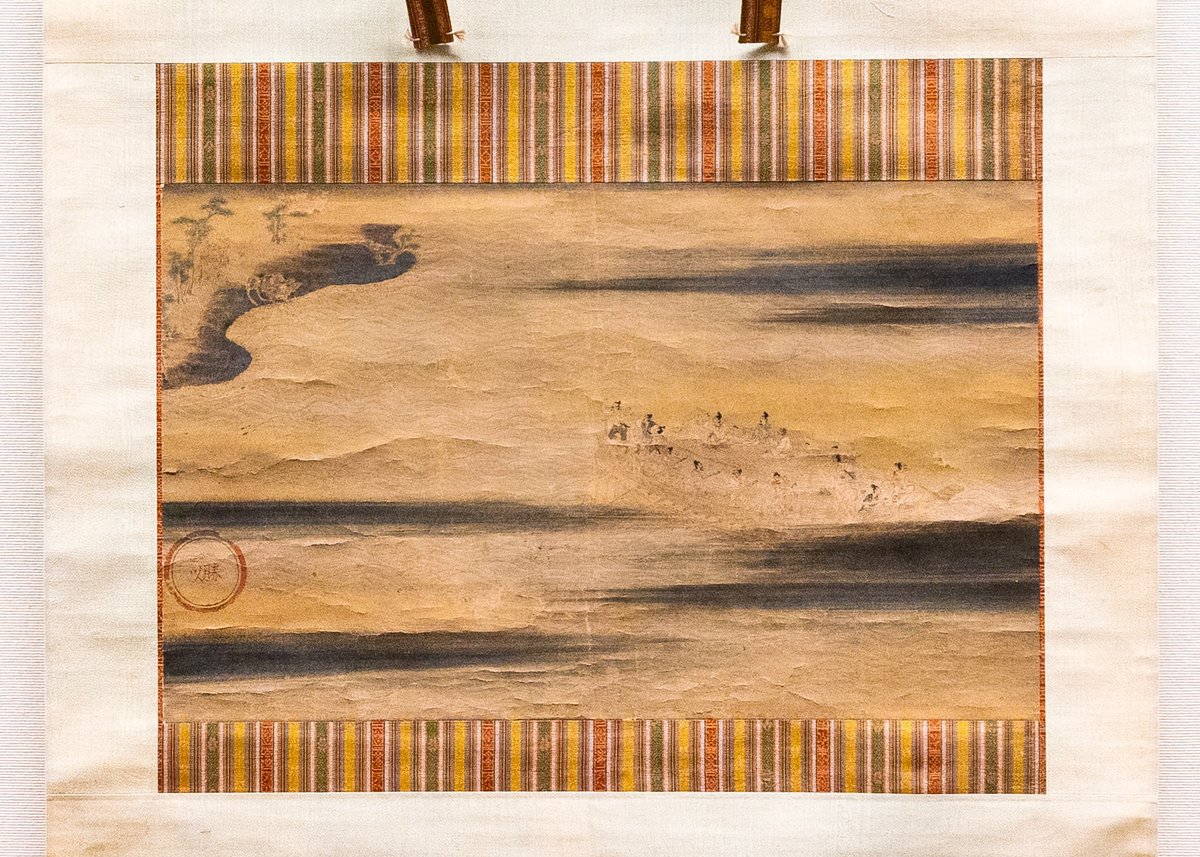
 Image: Hosomi Museum, Kyoto
Hosomi Museum in Kyoto has highlighted a work by Iwasa Matabei, ‘Junkanzu’, drawing attention to its connection with ‘The Tale of Heike’. In a staff recommendation posted by the museum, the painting is identified as a scene from the ‘Atsubashi’ chapter of the classical war tale, showing Shunkan pleading to be allowed aboard a boat as the sea opens around him.
The museum’s note focuses on the painting’s narrative force rather than on a larger exhibition announcement. It presents the work as a vivid example of how Japanese painting can translate literary episodes into visual drama, using a single moment from the story to convey the character’s isolation and desperation.
According to the museum’s description, the movement of the waves intensifies the tragedy of the scene. The water’s energy is contrasted with Shunkan’s plea, creating a strong sense of sorrow and hopelessness. That emphasis on the sea and its motion points to the painting’s role as both a literary illustration and an emotionally charged image.
Iwasa Matabei is a significant figure in the history of Japanese painting, and Hosomi Museum’s post places ‘Junkanzu’ within that cultural lineage by linking it directly to one of the best-known episodes of ‘The Tale of Heike’. The museum’s language underscores the way the composition turns a classical source into a dramatic visual narrative.
No exhibition dates or special event schedule were given in the museum’s post. The highlight was shared as a staff recommendation, with the work presented through the lens of its story content: Shunkan asking to be taken on board, the sea stretching away, and the waves reinforcing the scene’s sense of loss.