 Image: Museum of Contemporary Art San Diego, La Jolla
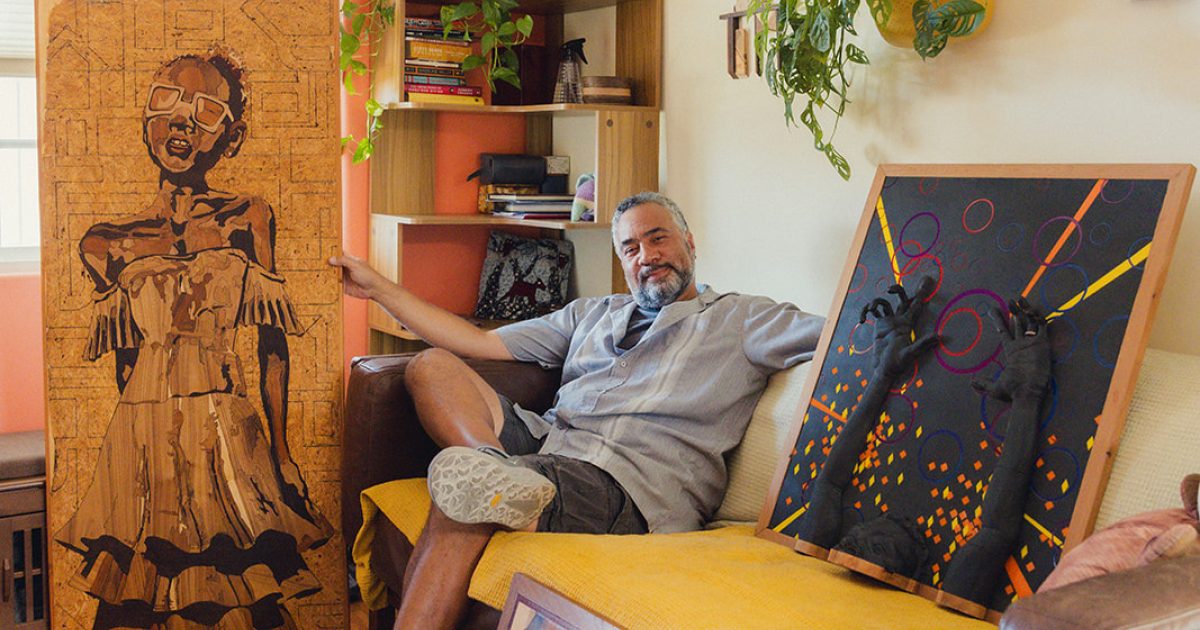
Museum of Contemporary Art San Diego is continuing its ‘Giants of San Diego’ project with a profile of Christopher Lloyd Tucker, a digital artist and sculptor whose practice moves between software, machine tools and hand assembly. The institution describes Tucker as an artist who emphasizes experimentation, working with a laser cutter, 3D printer and CNC routers, and then reassembling digitally generated forms into mixed-media works.
The new profile appears within MCASD’s wider ‘Giants of San Diego: Stories Behind the Art’ series, which is built around the premise that “all artists are giants.” The project extends ideas from ‘Giants: Art from the Dean Collection of Swizz Beatz and Alicia Keys,’ the landmark exhibition currently on view at MCASD. According to the museum, that exhibition was organized by the Brooklyn Museum in 2024 and brings together more than 130 works from the Deans’ collection, including paintings, photographs, sculptures and installations by nearly 40 Black diasporic artists.
Tucker’s profile places his work in that broader conversation while keeping the focus on his own process. In the interview material published by MCASD, he describes himself as someone who can do many things “just not painting,” and his studio setup reflects that range. The museum notes that his workspace in City Heights includes a laser cutter, a 3D printer, CNC router tools and mixed-media works, alongside old family photographs from Chicago, where his interest in art first developed.
MCASD says Tucker’s path was shaped by DIY learning and experimentation. After a stint in art school, he gravitated toward abstraction and self-directed study, then took workshops through Chicago’s parks district in woodworking, ceramics, jewelry-making and welding. Those experiences led to freelance teaching and an animation degree. After moving to San Diego about 10 years ago, he worked with maker spaces such as Maketory as a shop tech and educator, continuing to learn new tools while teaching others how to use them.
The museum also highlights Tucker’s current role as an educator at A Reason to Survive, or ARTS, a creative community center for youth. In the profile, he says he teaches in the way he wished he had been taught in art school: showing students how to use a tool properly and then giving them freedom to make what they want. That philosophy, as MCASD presents it, runs through both his studio practice and his teaching.
Visually, Tucker’s method begins with digital drawings made in a “z brush” technique he learned through animation studies, then moves into physical production. He uses machines to turn those drawings into objects and applies woodworking skills to put the pieces back together “kind of like a woodworking puzzle,” in his words. The resulting works are described by the museum as part-sculpture, part-portrait and part-figurative.
The profile ends by identifying the emotional thread in Tucker’s work: imagery of Black folk shaped by nostalgia for Chicago’s Black community and culture, and by missing his friends and family there. MCASD’s ‘Giants: Art from the Dean Collection of Swizz Beatz and Alicia Keys’ remains on view through August 9, 2026, with a closing celebration scheduled for August 7 at the museum’s La Jolla site.