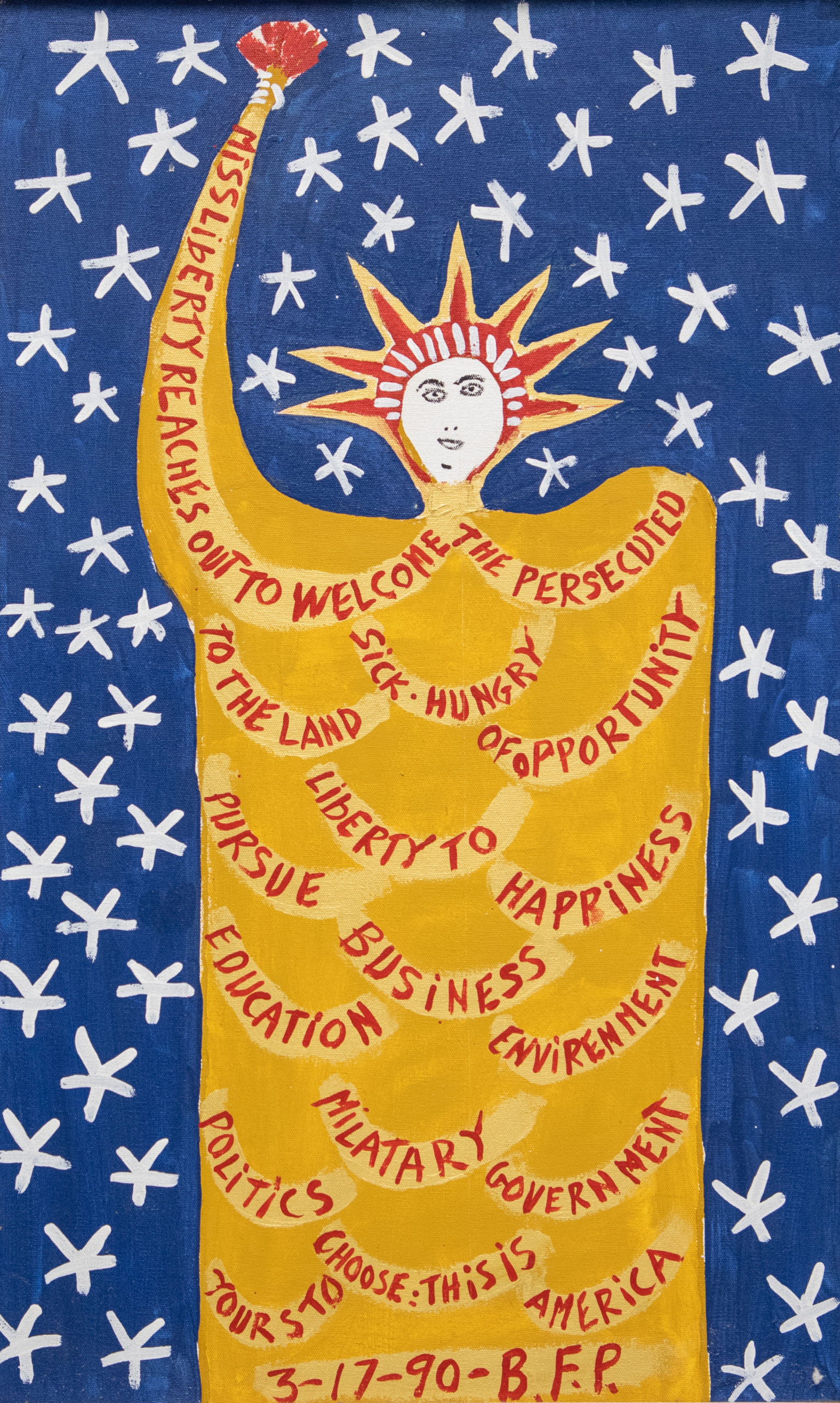
 Image: Reverend Benjamin Franklin Perkins (1904–1993), Miss Liberty Reaches Out to Welcome the Persecuted, Bankston, Alabama, March 17, 1990. Oil on canvas, 31 1/2 x 19 1/2 in. Gift of Audrey B. Heckler
The American Folk Art Museum in New York is marking the 250th anniversary of the United States with "Folk Nation: Crafting Patriotism in the United States," on view from October 9, 2026, to February 28, 2027. Drawn from the museum's own holdings, the exhibition looks at how vernacular art has been used to shape an American idea of self.
The show starts from the notion of "folk" itself, which the museum presents as a category that took shape alongside the art and antiques trades. Its objects are treated as carrying several layers of meaning, added not only by the people who made them but also by those who later collected and owned them.
A central argument is that Americans have long kept objects as a way of narrating who they are. After the Revolutionary War, and increasingly in the late 19th and early 20th centuries, people looked to early American things to build a national history and a shared identity. According to the museum, that impulse was often fed by a lingering worry that the young country was culturally provincial next to Europe.
Described by the museum as a concentrated presentation, the exhibition brings together historical and contemporary makers who expressed devotion to their country in a wide range of materials, while also bringing out the tensions and contradictions within such displays of patriotism.
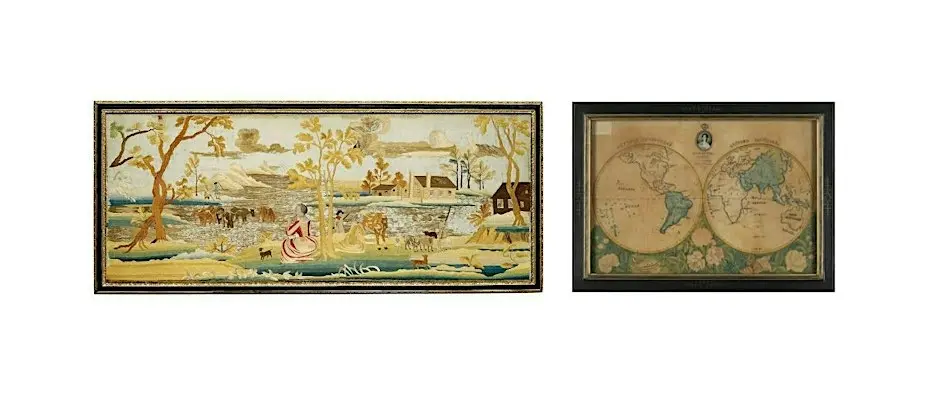
Works shown on the exhibition page span more than 150 years. They include Edward Hicks's painting "The Peaceable Kingdom with the Leopard of Serenity" (1835–1840), a whirligig of Uncle Sam riding a bicycle made between 1880 and 1920, probably in New York State, and a painting on wood panel titled "Situation of America, 1848." William Edmondson's limestone "Angel" (1937) and a carved dowitcher decoy from Shinnecock, Long Island, attributed to Charles Sumner Bunn or William Bowman, appear alongside Reverend Benjamin Franklin Perkins's "Miss Liberty Reaches Out to Welcome the Persecuted," painted in Bankston, Alabama, in 1990.
The exhibition is curated by Emelie Gevalt, the museum's deputy director and chief curatorial and program officer, and Caroline Culp, formerly an assistant curator at the museum and now Brock Curator of American Art at the Chrysler Museum of Art in Norfolk, Virginia. "Folk Nation" is part of Handwork 2026, presented by Craft in America.