 Image: Azerbaijan Carpet Museum, Baku
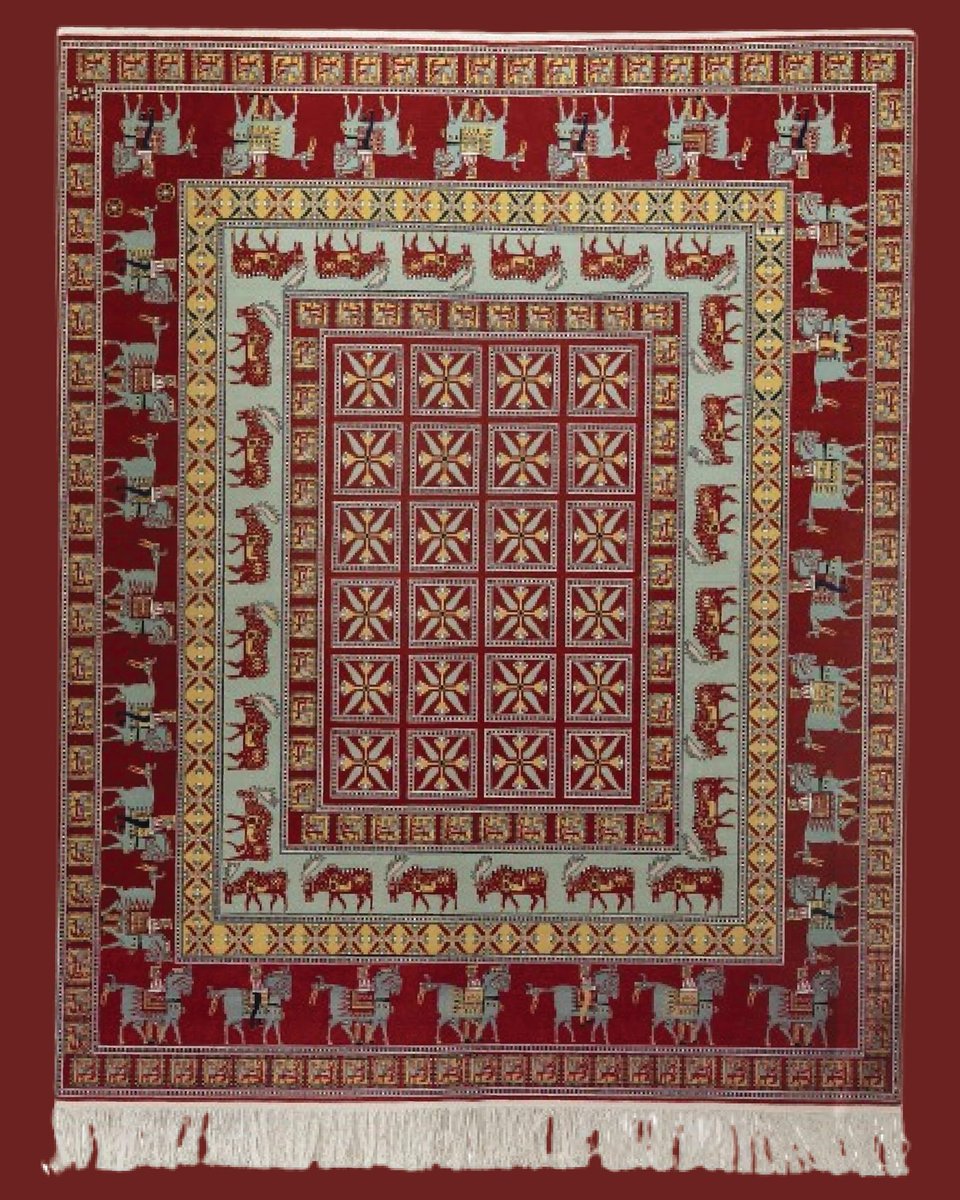
The Azerbaijan Carpet Museum says its Traditional Technology department has completed a replica of the Pazyryk carpet, described as the world’s oldest pile carpet. The work, made by nine professional weavers over two months, is presented by the museum as a significant example of Azerbaijan’s cultural heritage and a way of renewing attention to one of the best-known textiles from the ancient world.
The museum’s announcement places the project within its broader mission of preserving and demonstrating carpet-weaving traditions. As a national institution dedicated to carpet art, the museum regularly frames weaving not only as craft but also as historical evidence, linking material technique to questions of identity, continuity and heritage transmission. A reconstruction project of this kind underscores how museums can operate as active sites of making as well as preservation.
According to the museum’s post, the replica reflects a carpet with a history of roughly 2,500 years. The original Pazyryk carpet is widely recognized for its extraordinary age and for the role it plays in discussions of early textile history. In the museum’s description, the recreated version is notable for hidden ornamental motifs and for designs said to represent 24 tribes of the Turkic peoples.
The use of a traditional production process is central to the significance of the project. By assigning the reconstruction to specialist weavers in the museum’s Traditional Technology department, the institution emphasizes the continuity of handcraft knowledge and the labor-intensive methods required to reproduce an ancient textile. The two-month working period also points to the scale of skill needed to translate historical pattern into a contemporary museum object.
For the wider art world, the story matters because carpet making sits at the intersection of fine art, design, anthropology and historical study, yet is often underreported in mainstream art coverage. Projects like this one can bring renewed visibility to textile heritage and to the technical sophistication of weaving traditions that are central to cultural memory across the Caucasus and Central Asia.
The announcement does not indicate whether the replica is part of a permanent display, a temporary presentation or a longer research program. Even so, the completed work adds to the museum’s role as a custodian of Azerbaijani carpet culture and as a platform for interpreting a globally significant historical artifact through local expertise and traditional craftsmanship.