 Image: Blanton Museum of Art, Austin
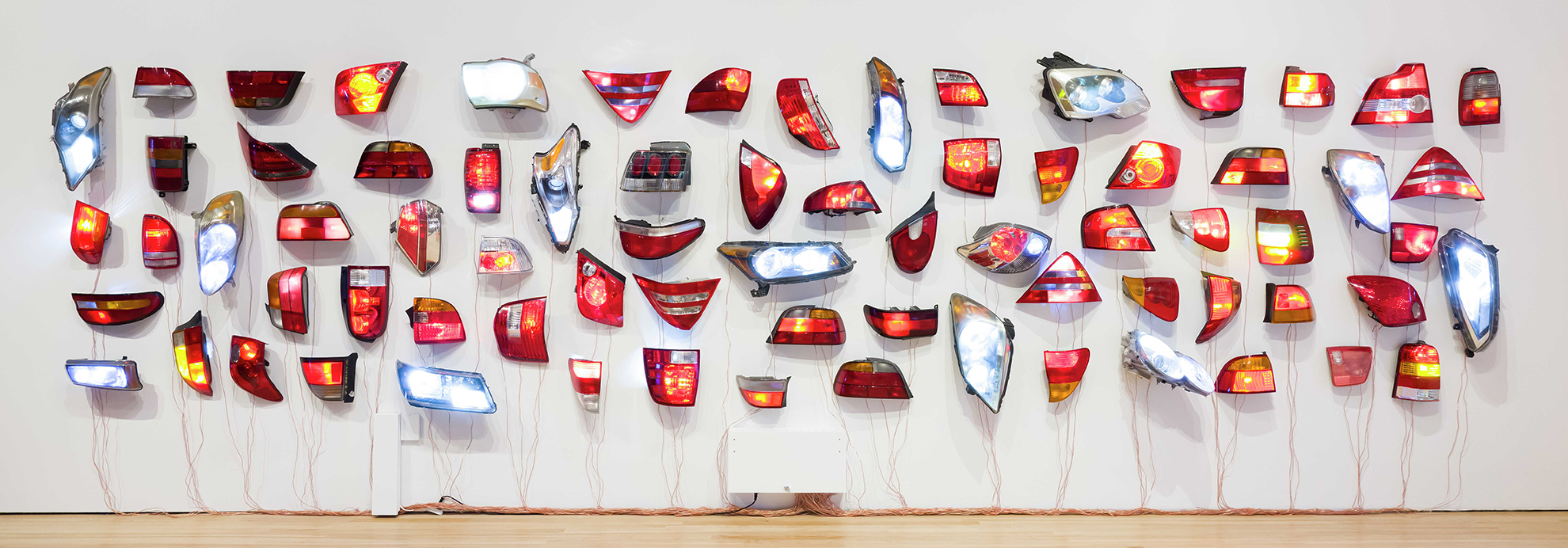
The Blanton Museum of Art in Austin is showing 'Run the Code: Data-Driven Art Decoded by Thoma Foundation X Blanton Museum of Art,' an exhibition focused on digital and data-driven artworks that turn code into image, motion and sound. On view through Aug. 2, the presentation gathers works by artists including Refik Anadol, Rafael Lozano-Hemmer, Marina Zurkow, Siebren Versteeg, Camille Utterback, Daniel Canogar and others from the Carl & Marilynn Thoma Foundation’s Digital and Media Art Collection.
The exhibition centers on contemporary generative and algorithmic art, with many of the works dating from the 2010s. Rather than treating code as an invisible technical infrastructure, 'Run the Code' frames it as a medium in its own right. According to the exhibition text, data in these works is “reworked—becoming color, rhythm, distortion, and light,” a description that captures the show’s focus on the aesthetic possibilities of computation.
Curator Hannah Klemm, Curator of Modern and Contemporary Art at the Blanton and organizer of the exhibition, has emphasized that the project is not meant as a full history of computer art from the 1960s onward. Instead, it focuses on a more recent period of digital practice, especially generative and algorithmic work from the 2010s. That decision places the exhibition within current conversations about technology, while also linking it to longer histories of artistic experimentation with tools and systems.
Several works in the exhibition illustrate how artists use software and datasets to produce images that change over time. Siebren Versteeg’s 'Daily Times' converts the constantly updating homepage of The New York Times into painterly abstraction, while Refik Anadol’s 'Machine Hallucinations – Study I' uses a neural network trained on hundreds of thousands of images of Gothic cathedrals to generate synthetic architectural forms. In each case, the final image is not fixed in advance but emerges through an evolving system.
The exhibition also includes works that translate bodily data and digital life into visual form. Rafael Lozano-Hemmer’s 'Pulse Index' uses fingerprints and heartbeats to build a growing archive of biometric information, and Daniel Canogar’s 'Billow' draws from Google search trends to produce sculptural animation. These works underscore one of the exhibition’s key ideas: that data can be made visible, but not simplified, through art.
Marina Zurkow’s 'Mesocosm (Wink, TX)' extends that approach into environmental and industrial terrain, presenting a looping digital ecology based around a West Texas oil field. Weather, wildlife and infrastructure fold into one another in the work, which reflects the exhibition’s broader interest in systems that are at once technical, bodily and ecological.
'Run the Code' remains on view at the Blanton Museum of Art through Aug. 2.