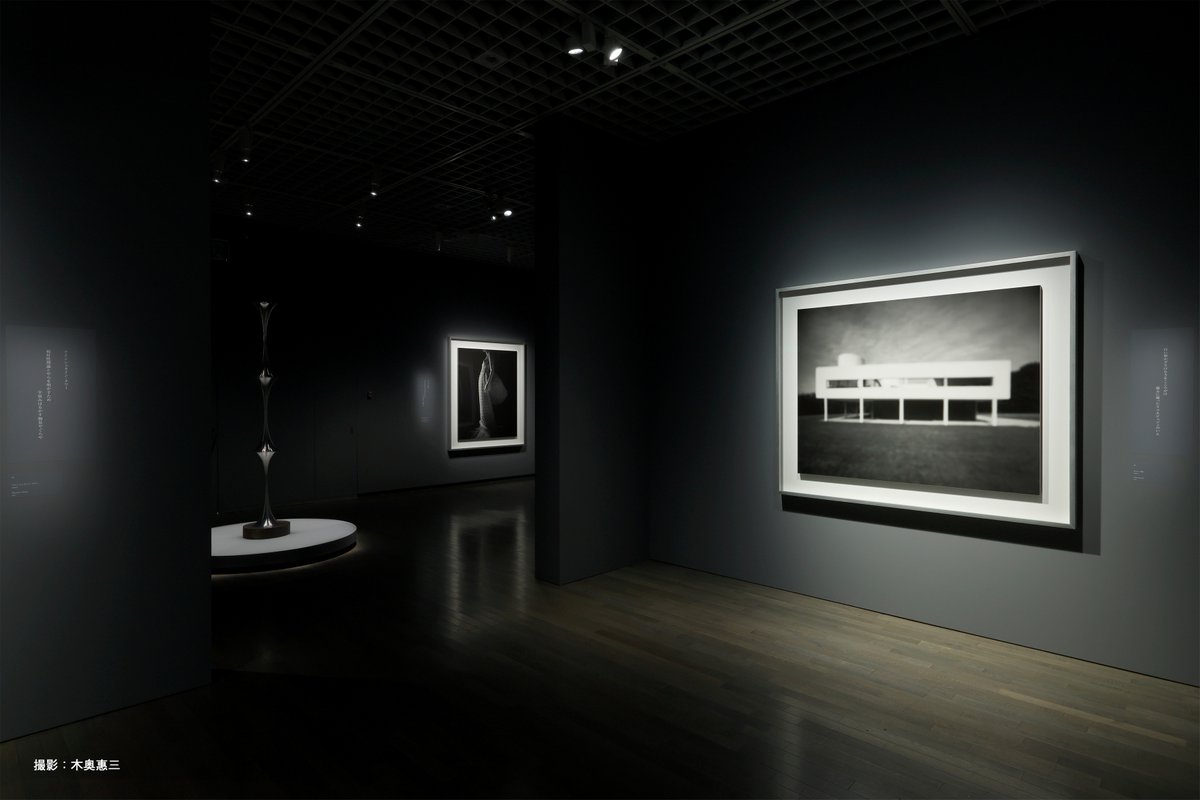
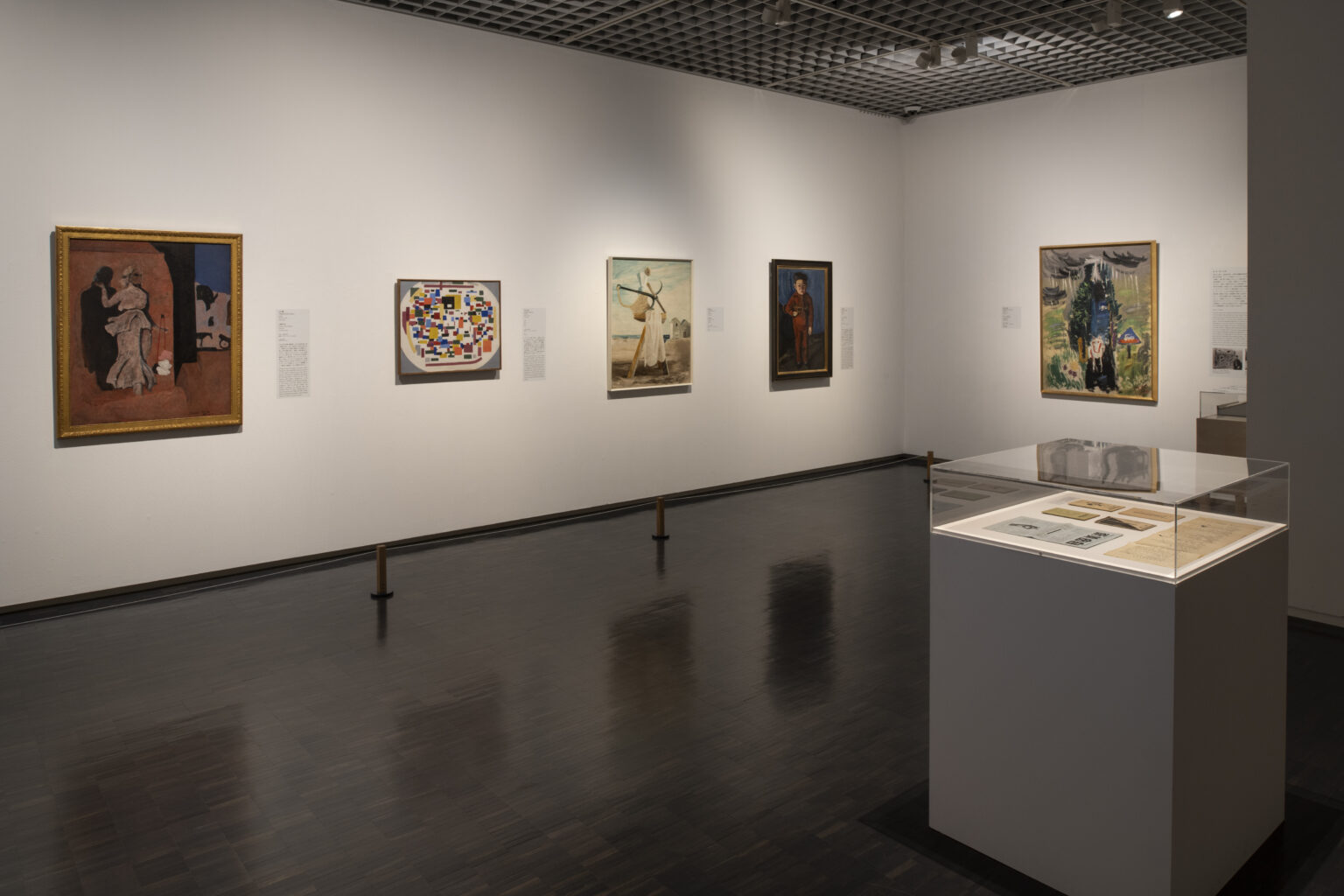
 Image: Installation view, “120th Anniversary of His Birth: Hasegawa Saburo and the National Museum of Modern Art, Tokyo”, Gallery 4, The National Museum of Modern Art, Tokyo. Photo: Yanagiba Dai
The National Museum of Modern Art, Tokyo has published a review of its collection-focus display "120th Anniversary of His Birth: Hasegawa Saburo and the National Museum of Modern Art, Tokyo", on view in Gallery 4 on the museum's second floor until 13 September 2026. The review went online on 14 August 2026 in the museum's web magazine 現代の眼 (Gendai no Me, The Eye of Modern Art) and was written by Hirai Shoichi, a professor in the Faculty of Letters at Kansai University.
The display, which opened on 26 May 2026, sets Hasegawa Saburo (1906–1957), a pioneer of abstract art in Japan, against the early history of the museum itself. MOMAT notes that it opened in 1952 as Japan's first national art museum, in a converted former Nikkatsu headquarters building in Kyobashi rather than a new one, and that the word "modern" was written into its name to signal a "dynamic museum" engaged with contemporary art and with postwar cultural recovery. Hasegawa played a key role in two exhibitions mounted in that spirit: Abstraction and Surrealism (1953) and Abstract Art Exhibition: Japan and U.S.A. (1955).
The museum's premise is that Hasegawa has long been read through the pairing of painting and writing, as in the two-volume posthumous catalogue of 1977, and that a third role, curator, deserves equal weight. The display traces his path through his own works and those of related artists, alongside his exhibition work and his prolific output as a writer.
Hirai's review sharpens that claim. He explains that Hasegawa surfaced during research for two earlier MOMAT projects, the 2022 Playback of Abstraction and Surrealism and the 2024 Playback of Abstract Art Exhibition: Japan and U.S.A. The prospectus and the large explanatory panels that introduced prewar avant-garde art to general visitors in 1953 were Hasegawa's work, and the current display makes that more persuasive by placing them beside his manuscripts from the Konan Gakuen Saburo Hasegawa Memorial Gallery. He adds that the 1955 Japan–U.S. exhibition came about in return for Hasegawa's efforts in 1953, when the American Abstract Artists group asked him to coordinate Japanese abstract artists, and that the idea of counting avant-garde calligraphy as abstract art was distinctly his.
Hirai's central observation is that Hasegawa's name appears nowhere in the official documentation of either exhibition. He curated both from behind the scenes while the museum publicly credited the critics Uemura Takachiyo and Takiguchi Shuzo. The review states that the display does not include documents answering why the museum relied on him so completely, but argues that the reliance itself measures how singular his position in the Japanese art world then was. Hirai also points to a quieter body of evidence on the walls: the books Hasegawa published between the end of the war and 1953, 『新らしい絵を見る手引』(1948), 『モダン・アート』(1950) and 『現代美術:理論と鑑賞』(1952), which he reads as primers and educational works rather than criticism, marking Hasegawa out first of all as someone able to explain difficult modern art in plain language.
MOMAT credits the Konan Gakuen Saburo Hasegawa Memorial Gallery among those who supported the exhibition, and publishes a work list and a pamphlet as PDFs; a painting by Hasegawa, Rainy Orléans Road (1930), illustrates the exhibition page. Admission is 500 yen for adults and 250 yen for university students, with reduced rates after 5pm on Fridays and Saturdays and free entry for high-school students and under, visitors under 18, those 65 and over and MOMAT Passport holders; the same ticket covers the MOMAT Collection displays on the day of entry. Opening hours are 10:00 to 17:00, extended to 20:00 on Fridays and Saturdays, with Mondays closed. Installation views published with the review are credited to the photographer Yanagiba Dai.