 Image: Museo delle Porcellane, Florence
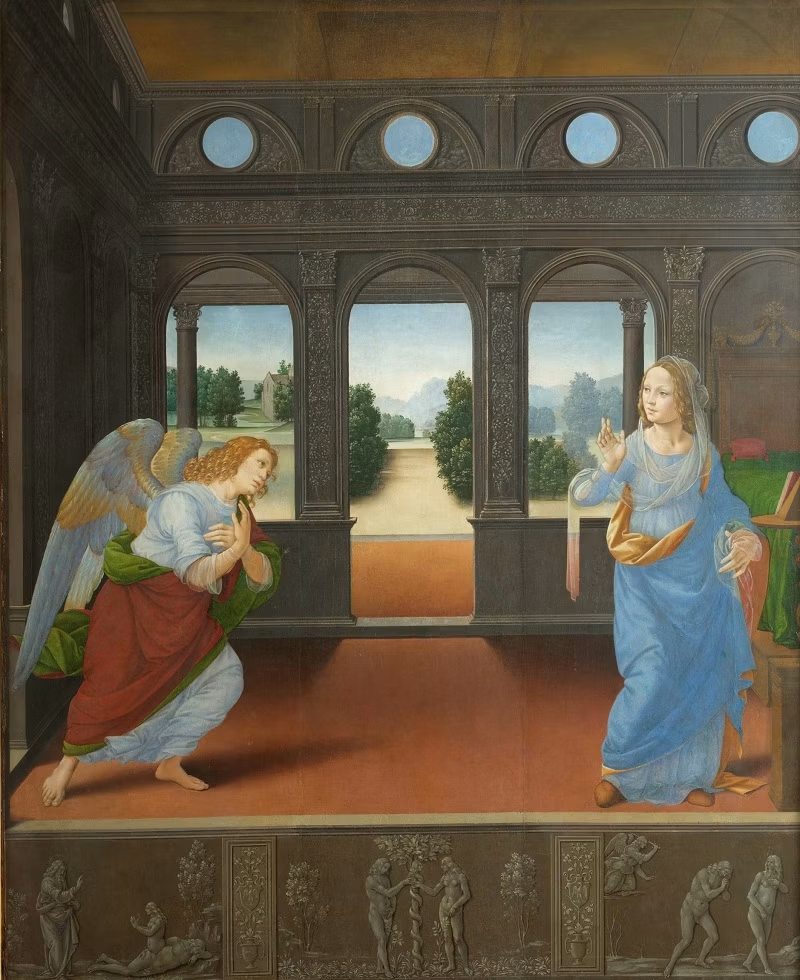
The Uffizi Galleries have highlighted Lorenzo di Credi’s ‘Annunciation’, a painting dated to 1480–90 and held in the Uffizi collection in Florence. The work presents the biblical encounter between the Virgin Mary and the archangel Gabriel within an architectural setting whose details reinforce the painting’s religious meaning.
Lorenzo di Credi was born in Florence in 1456 or 1460 and died in 1536. The Uffizi records the painting as a tempera on panel measuring 88 by 71 centimetres. It is listed under inventory number 1890, no. 1597, and assigned to location A29, in the Lorenzo di Credi section of the museum.
The composition gives unusual prominence to the house in which the Virgin receives the announcement. The room’s bed and a lectern with an open book are visible, while Mary turns away from her reading to respond to Gabriel. The two figures stand at opposite sides of the image, leaving the centre open to a distant landscape framed by a classical three-arched arcade.
The architecture is largely rendered in monochrome, interrupted by four round openings against the blue sky. A monochrome parapet occupies the foreground and functions visually like a predella. Its three sections contain scenes from the Hebrew Bible: the creation of Eve, the original sin of Adam and Eve, and the expulsion of the two figures from paradise.
According to the Uffizi’s interpretation, these scenes establish the central theological relationship in the painting. Eve is associated with humanity’s fall, while Mary appears as the “new Eve”, the woman from whose womb the saviour of humanity will be born. The museum describes the work as a complex theological composition reflecting the spirituality of the years during which the preaching of Fra Girolamo Savonarola shaped Florentine religious life.
The painting’s original provenance is unknown. The pilasters of the predella include a shield bearing an eagle, which may represent the emblem of its commissioner, although the Uffizi presents that identification as uncertain. The work entered the collection of Cardinal Leopoldo de’ Medici in the 17th century. The Uffizi lists it within its painting collection at the museum in Florence.