 Image: Homma Museum of Art, Sakata
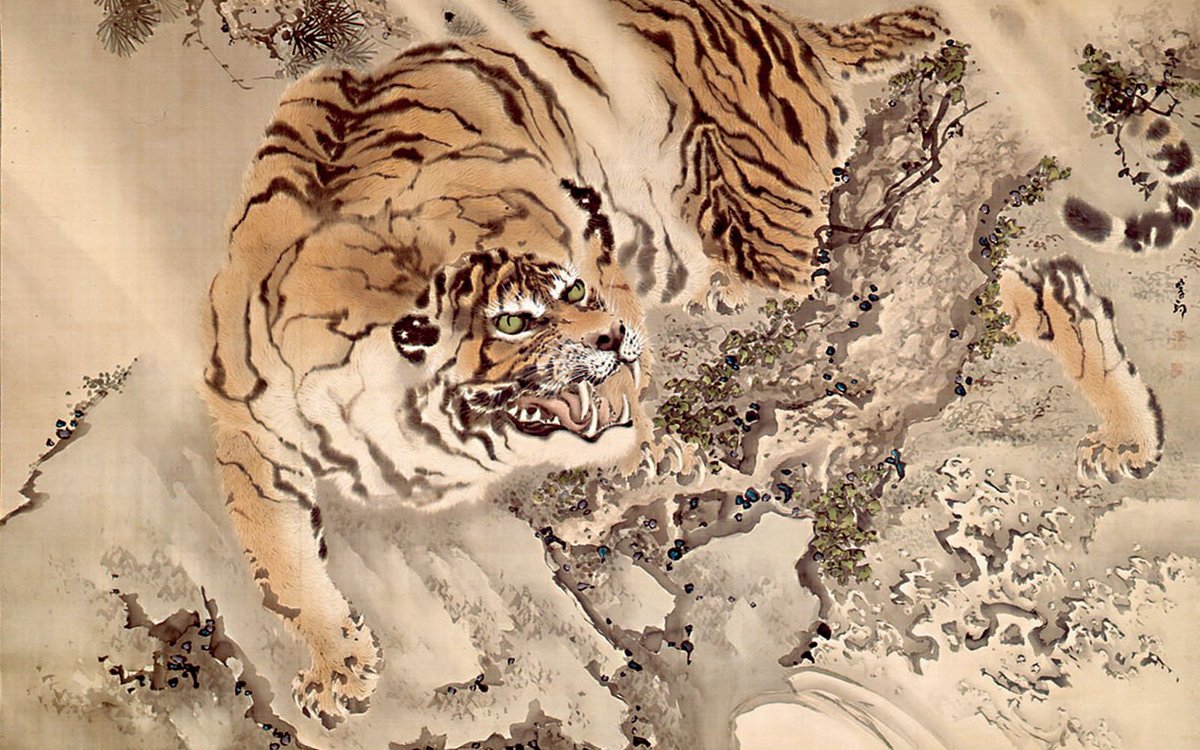
The Homma Museum of Art in Sakata, Japan, has highlighted a tiger painting by Ganku, focusing on the artist’s efforts to approach the appearance of a living animal through close study of its physical form.
In a post published on 17 August 2026, the museum states that Ganku acquired a tiger skin, skull and all four feet in pursuit of a more accurate understanding of the animal. He studied the tiger’s structure, including the proportions and lengths of its individual features.
That research is reflected in the featured work, according to the museum. The painting emphasizes the patterns across the tiger’s body and the rises and contours of its build, creating a large-scale image intended to evoke the realism of an actual tiger.
The description presents Ganku’s practice through the relationship between direct observation and painted representation. Rather than treating the tiger only as a conventional pictorial subject, the museum’s account stresses the artist’s investigation of its anatomy and surface appearance.
The post does not identify the work by a separate title, provide a date for its creation, or announce an exhibition or event connected with the painting. It is presented as an artwork-focused interpretation from the Homma Museum of Art’s collection or museum programming. The available material also does not specify the painting’s medium, dimensions or current display location.